Lester Platt on The Role of AI in Modern Productions
Lester Platt on The Role of AI in Modern Productions
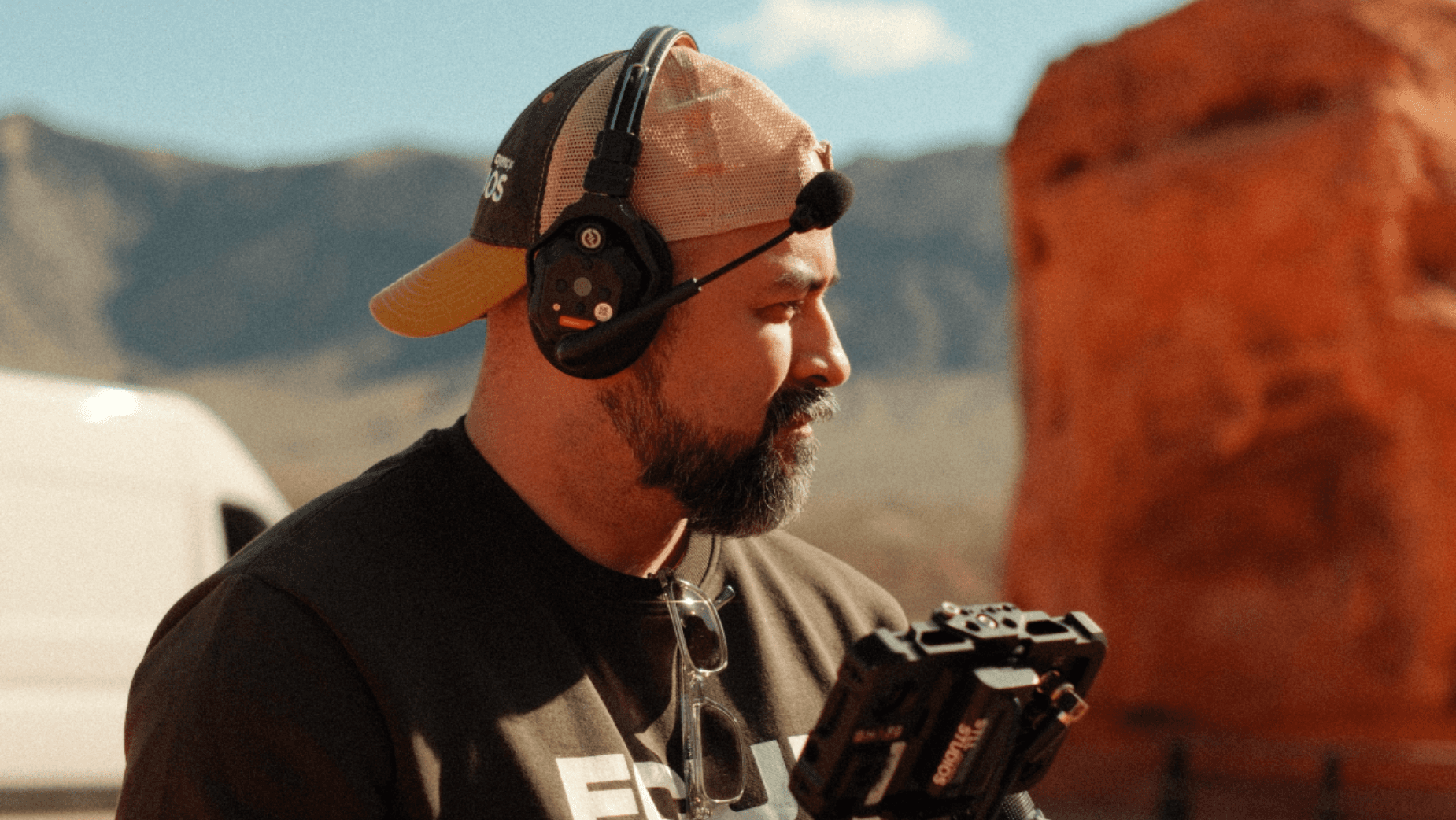
The founder and CEO of STLL STUDIOS on using AI as a creative accelerator and structuring tool whilst keeping the creative direction human driven, as part of LBB’s Prompt Production: Commercial Filmmaking in the AI Age series
Lester Platt is an American filmmaker, cinematographer, and producer, and the founder and chief executive officer of STLL STUDIOS, a Texas-based production company specialising in high-end commercial and narrative storytelling. With over a decade of experience in marketing and filmmaking, Platt has built a reputation for blending cinematic craft with strategic brand storytelling, working with clients such as H-E-B, Zillow, Morgan Stanley, L’Oréal, and Le Creuset.
After relocating to Austin, Texas in 2018, Platt launched STLL STUDIOS in 2022, quickly scaling the company into a full-service production house known for its visually striking work and efficient, story-first approach. Under his leadership, STLL has expanded into virtual production, 3D animation, and AI-assisted workflows, positioning the company at the intersection of technology and storytelling.
In addition to commercial work, Platt is actively developing original film and television projects, with a focus on psychological thrillers and character-driven narratives. He serves as executive producer on the feature film ‘Each Other’s Country’, marking a key step in STLL’s expansion into long-form content.
Platt’s work has earned industry recognition, including a Telly Award, and he has been invited to serve as a mentor at SXSW, reflecting his growing influence within both the commercial and independent film communities.
Beyond production, he is passionate about education and mentorship, leading cinematography masterclasses and speaking on the evolving role of technology in filmmaking. His work continues to explore the balance between human emotion and innovation, aiming to push the boundaries of modern visual storytelling.
Lester sat down with LBB to discuss how STLL STUDIOS is integrating AI into pre and post production, and how the technology could soon dramatically reduce some of the biggest constraints on ambitious VFX
LBB> In which specific stage of your commercial filmmaking process is AI currently delivering its most transformative creative or logistical results, and what specific tool do you rely on most?
Lester> AI is currently most impactful for us during pre-production and post-production. In pre-production, we use tools like ChatGPT to help structure the creative process – organising ideas, refining concepts, developing shot approaches, and shaping early narrative direction. It’s not generating the creative vision itself; that still comes from our team. What AI does well is accelerate the thinking process and help us quickly structure ideas into clear creative frameworks.
In post-production, AI becomes more practical from a visual standpoint. We use it to support VFX development and animation concepts, particularly when working with product-focused visuals where we want to enhance details or visualise elements that would be difficult or costly to capture in-camera. It allows us to explore visual treatments quickly before committing to full VFX execution.
Overall, AI works best for us as a creative accelerator and structuring tool, helping streamline ideation and visualisation while the creative direction and storytelling remain firmly human-driven.
LBB> How has AI fundamentally changed how you build a visual treatment or pitch a concept? How do you sell a vision to an agency or brand when the most ambitious visuals can be generated digitally before a single crew member is hired? Does it make it easier to sell in an approach or does it make it harder to stand out?
Lester> AI has significantly changed how we build visual treatments and pitch concepts.
Traditionally, showing ambitious ideas, especially VFX-heavy sequences, would require storyboards, animatics, or a proof of concept that could take weeks and cost thousands of dollars.
Recently, while pitching a feature film to investors, we created a two-minute proof of concept using AI tools like Higgsfield in about a day. Producing that same sequence traditionally would have required filming, VFX artists, and months of work. Now we can quickly translate our vision into strong visuals that help investors or brands immediately understand the scale of an idea.
But it also raises the bar, since impressive visuals are easier to generate, what really makes a pitch stand out is still the strength of the concept and the creative vision behind it.
LBB> When it comes to AI in filmmaking, what are the pros and cons of fully-AI productions versus hybrid productions?
Lester> Honestly, the cons right now is people’s reception, as it’s new technology, we’re in that phase where other creators have a rough time accepting it. As an AI user or AI creator, you’re in a very delicate position. Like DJs got some hate at some point as they work with existing tracks, they don’t create music from scratch, AI filmmaking is gathering a lot of hate because you’re not practicing the craft, you’re not practicing lighting, or composition, or dealing with camera settings or talent moods, or weather, you’re literally writing a prompt until the shot you need shows in the screen.
The pro is efficiency, time is money for you and the client. We started applying AI for VFX, product animation and pitching purposes, as I mentioned before, you no longer need a 3D animator to create a render of a product floating in the air, or a VFX artist to switch the location of the product, you don’t have to wait weeks for the results, you can get it done in minutes, approved the next day.
LBB> In terms of the production process, what elements of the traditional production process do you see mirrored in the AI filmmaking workflow and in what ways does the new way of working differ wildly? Is there a ‘standard’ AI production workflow or do you find you need to build anew for each project?
Lester> One of the main challenges right now is perception within the industry. Like any new technology, AI is going through a phase where many creators are skeptical or resistant to it.
Some feel that fully-AI productions bypass the traditional craft of filmmaking, things like lighting, composition, working with actors, or dealing with real-world production challenges.
In some ways it’s similar to how DJs were once criticised for working with existing music instead of creating it from scratch.
The biggest advantage, however, is efficiency. Time is money for both filmmakers and clients. AI allows us to quickly generate VFX concepts, product animations, or visual prototypes that previously required weeks of work from 3D artists or VFX teams. What used to take weeks can now happen in minutes, which accelerates approvals and creative exploration.
For us, the most practical approach right now is hybrid filmmaking – using AI to support areas like visualisation, VFX, or pitching, while still relying on traditional filmmaking craft for storytelling, performance, and cinematography.
LBB> AI is creating new roles. How is your production company restructuring or upskilling your teams to handle ’hybrid’ filmmaking? What does the ‘crew’ on an AI production project look like?
Lester> Right now, the use of AI usually starts at the concept stage, so creative directors and directors play a key role in deciding where AI fits into the project. They’re the ones determining whether AI should be used for concept visualisation, VFX prototyping, product animation, or other creative elements.
I also think we’re going to see the emergence of specialised AI vendors, similar to how we work today with 3D animation studios, VFX houses, or sound design teams. Instead of every production company building a full internal AI department, there will likely be AI artists or AI-focused studios that specialise in prompting and generating specific assets for productions.
So on an AI-assisted project, the crew might still include the traditional roles, director, cinematographer, editor, etc., but you’ll also see AI artists or prompt specialists collaborating with the creative team to generate visuals, environments, or VFX elements that support the production.
LBB> The speed of new releases means that there’s a different set of ‘best’ tools every couple of weeks! How do you keep up with that and what are your go-to tools right now? To your mind, what have been the most significant recent developments?
Lester> The space is evolving so quickly that part of the job now is simply continuous experimentation, testing tools every few weeks to see what’s actually production-ready and what’s still just hype.
Right now we’re using Higgsfield, Nano Banana Pro for images, and Kling 3.0 for video generation. What’s been really interesting recently is the ability to create consistent visual elements across prompts, generate multiple angles of the same scene, and even define a visual style by selecting things like camera type, lens, and aperture. That level of control starts to make AI outputs feel closer to a real cinematography workflow, you can shift from a polished commercial look to something more stylised with the character of an anamorphic lens.
The real breakthrough, in my opinion, will come when you can upload a shot list or storyboard and have AI generate a full visual first draft of a scene or sequence. That would dramatically accelerate previsualisation and creative iteration. It sounds futuristic, but with the pace these tools are evolving, we may not be that far from it.
LBB> Where do you think AI is currently weak in the filmmaking process, where do you find that the classic methods are still best/easiest/quickest?
Lester> Transmitting emotions is definitely something only humans can do, no matter how fancy or cool an image can be, AI will never be able to encapsulate empathy, experience, pain, etc. AI is definitely useful for inanimate objects and creating floating elephants, but stories and emotion will always come from us.
LBB> One of the pushbacks we hear frequently is that AI filmmaking removes the fun that attracted many people to filmmaking in the first place - what’s your take? Where do you find the fun?
Lester> AI is still weak when it comes to authentic human emotion and performance. You can generate impressive visuals, environments, or surreal imagery, but the nuance of empathy, lived experience, and emotional truth is something that still comes from real people. A powerful story moment, an actor’s expression, a pause in dialogue, the chemistry between characters, is very difficult for AI to replicate in a convincing way.
Where AI works best today is with inanimate objects, environments, or stylised visuals, things like product shots, surreal imagery, or conceptual visuals that would normally require heavy VFX.
But when it comes to storytelling, directing actors, and capturing genuine emotion, the traditional filmmaking process is still the strongest and most reliable approach. AI can support the visuals, but the emotional core of a film still has to come from human experience.
LBB> The biggest challenge for major studios is legal uncertainty regarding IP and data. Recent legal cases (Getty v Stability) suggest that things may be flowing in favour of the tech platforms. Given there’s still no clear regulatory framework, what are the key legal and ethical concerns you prioritise in your production processes and how do you address them?
Lester> One of the biggest concerns is misuse of likeness and identity. Cloning someone’s face, voice, or recognisable style without permission can quickly cross ethical and legal lines. As these tools become more accessible, actors and talent will likely need stronger protections around their image rights and voice rights, similar to how contracts already protect their performances.
For us, the priority is transparency and consent. If AI is used in a project, especially in ways that could replicate a person’s likeness or performance, it should always be done with clear permission and proper agreements in place.
More broadly, we try to use AI as a supporting tool for visualisation, VFX, and concept development, rather than as a way to replace or imitate real artists or performers without credit. As the legal framework evolves, maintaining ethical use and respecting creative ownership will be essential for the industry.
LBB> The digital ecosystem is filling with generic AI-generated content. As a filmmaker, what is your creative philosophy for using AI to generate content that stands out and feels authentic, rather than plastic, idealised, or disposable?
Lester> For us, AI works best when it builds on real creative foundations, not when it replaces them.
Most of the AI visuals we generate start from frames we’ve already designed and shot, with real lighting, composition, and camera work created in the studio. AI then helps us enhance or extend those visuals, for example with product animations or environmental effects.
What people call ‘AI slop’ usually comes from prompts that have no real creative process behind them, just a few lines of text generating something generic. Without a strong concept, cinematography thinking, or design language, the result often feels empty.
Our philosophy is that craft still has to come first. The ideas, framing, lighting, and storytelling come from filmmakers. AI is simply another tool to push those ideas further, not a shortcut to replace the creative process.
LBB> Looking ahead three to five years, what is one creative constraint you have today that you are certain AI will completely eliminate for commercial directors and producers?
Lester> One of the biggest constraints today is the budget required for ambitious VFX ideas. Creating complex visual effects often requires specialised artists, long post-production timelines, and significant budgets, which can limit how bold a concept a director can realistically pitch.
In the next three to five years, I believe AI will dramatically reduce that barrier. Many VFX-driven ideas that currently require large teams and months of work will be achievable much faster and at a fraction of the cost.
There will likely be two tiers: high-end, custom VFX crafted by specialised artists for major productions, and AI-driven VFX created by AI artists or smaller teams, which will be faster, more affordable, and still visually compelling. That shift could allow directors to pitch and execute far more ambitious visual ideas without being limited by traditional VFX budgets.